
Biospecimens
Your direct resource for high-quality, prospective human biospecimens for biomedical research and drug discovery.
Customized solutions for procurement of
high-quality tissues
Tissue quality critically impacts research, and the most important factor for quality is the biospecimen recovery process; however, most biospecimen providers rely on third parties to obtain human tissues, limiting oversight and threatening sample integrity.
LifeNet Health® LifeSciences, a division of LifeNet Health®, a Federally Designated Organ Procurement Agency, serves as a direct resource for high-quality, prospective human biospecimens.
Our customized tissue procurement solutions enable donor criteria and sample acquisition based on your specific experimental requirements, while following the highest operational and ethical standards for recovery and processing.
High-quality biospecimens that advance biomedical research
LifeNet Health® LifeSciences partners directly with each researcher to understand their research goals and create a research collection protocol that maximizes sample quality.
- Biospecimens are recovered and preserved by skilled anatomists.
- Healthy and Diseased tissues.
- Multiple preservation options: fresh, formalin-fixed, frozen, or supplied per protocol-specific methods.
- Recovery of tissues with low Warm Ischemic Time (WIT) from 1-24 hours.
- Infectious disease testing available upon request.
.png&w=3840&q=100)
.png&w=3840&q=100)
.png&w=3840&q=100)
.png&w=3840&q=100)
.png&w=3840&q=100)
Why work with LifeNet Health LifeSciences?
- Over 40 years of experience in recovery and preservation of donor gifts.
- Only biospecimen provider in the world that provides donation from consent to prospective recovery to sample transport.
- Vertically integrated infrastructure allows us to offer a variety of research specimens including organs, tissues, and fluids.
- Comprehensive donor medical and social histories provided with full authorization and research disclosure.
- 24/7 recovery and logistics, including international shipping.
- Exceptional customer support.
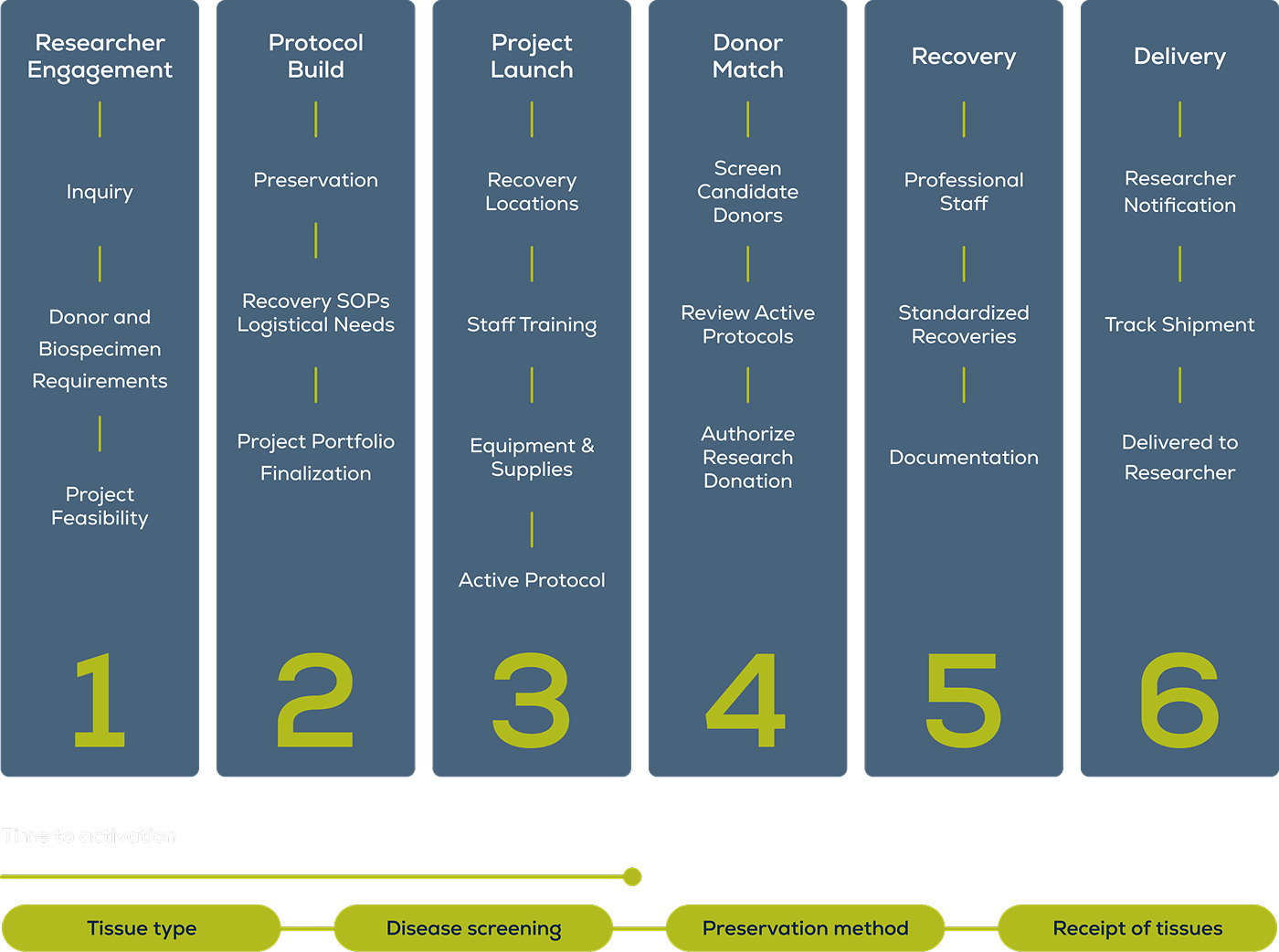
How to work with us
Getting started is easy - simply fill out the form linked below. A dedicated project leader will guide you through the process from inquiry to delivery of your biospecimens.
Broadest range of tissue recovery capabilities
5000+
Research Recoveries
200+
Custom Protocols
50+
Tissue Types
Ethical authorization for research donation
LifeNet Health® adheres to the highest standards of ethical, safe research recovery, and prioritizes the comfort and respect of the donor and donor family. Our authorization for research donation includes:
- Specific tissue authorization, including permission for genetic testing and storage for future applications.
- Full disclosures for broad use of biospecimens and cells.
- Authorization conducted by trained, professional transplant donation personnel.
- Practices developed in conjunction with an Ethical Legal Social Implications study and in compliance with the Uniform Anatomical Gift Act.
Resources
Recovery Insight: Prospective Collection of Human Neurological Tissues
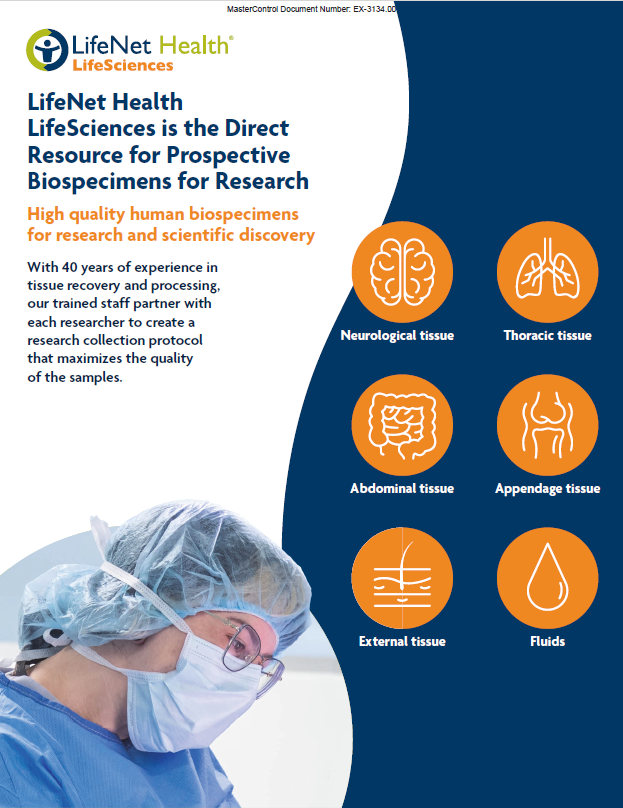
Human Biospecimens for Research
Human Biospecimens Unveiled: Navigating Cutting-Edge Standards for Research
Have questions about biospecimen recovery?
Find answers to our most frequently asked questions below.
What is considered a standard biospecimen recovery?
A standard biospecimen recovery includes biospecimens that come from specific anatomical locations on which our expert team of recovery technicians are extensively trained. The anatomy is also complimented by one of our standard preservation techniques utilizing an appropriate preservation media to ensure consistency in biospecimen sample quality.
What comprises a custom biospecimen recovery?
A custom biospecimen recovery project features the collection of multiple tissue types, advanced dissection and preservation methods, and minimal time from donor identification to preservation.
What does postmortem interval time mean?
Postmortem interval (PMI) time is the time from cessation of blood flow to when the tissue arrives at the researcher’s location.
What is warm ischemia?
Warm ischemia is the interval of time from cessation of blood flow to the time when the biospecimen is exposed to a preservation solution.
What is cold ischemia?
Some preservation methods require more than one step such as a rinse prior to final media preservation, formalin fixed paraffin embedded, or optimal cutting temperature samples. LifeNet Health can accommodate specific researcher requirements and works with the researcher to provide the specific preservation methods necessary for project success.
What are common preservation methods?
The most common biospecimens preservation methods include freezing or placement into media or fixation solution and immediately shipped to the researcher.
What are additional processing requirements?
Some preservation methods require more than one step such as a rinse prior to final media preservation, formalin fixed paraffin embedded, or optimal cutting temperature samples. LifeNet Health can accommodate specific researcher requirements and works with the researcher to provide the specific preservation methods necessary for project success.
What is an organ/tissue flush?
In some instances, researchers may require a vascular flush of the organ or tissue. LifeNet Health has experience with this technique and can build this into research projects.
What types of media are used in solid organ donation?
Belzer UW/UW Solution/Viaspan is the gold standard and most common solution to preserve solid organs for transplant. HTK (Histidine-tryptophan-ketoglutarate) Solution or Custodial HTK Solution is also used by several US based organ procurement organizations. Some less expensive alternatives that support research organ and tissue preservation include Lactated Ringers Solution, saline, and DMEM.
What do I need to know about disease?
The presence or absence of specific diseases is important for many research projects. When establishing the donor eligibility parameters for any human biospecimen recovery project the requirements need to be very specific and list diseases of interest and diseases that should be excluded.
How do co-morbidities impact research?
Most post-mortem donors have co-morbid diseases. Knowing how these affect the targeted biospecimen is very important when designing a research study using human organs and tissues.
How can patient treatment(s) interfere with my study?
Many post-mortem donors will have various ongoing treatments at the time of their death. Certain treatments like chemotherapy have systemic affects that can damage the research biospecimen. When working with LifeNet Health to build your donor profile, pay careful attention to how various treatments could impact your project.
Should I be careful regarding previous surgeries?
Yes, previous surgeries can help in understanding a donor’s health history. As an example, if your project requires a non-diseased heart, you will want to exclude any donor with previous cardiac surgery.